
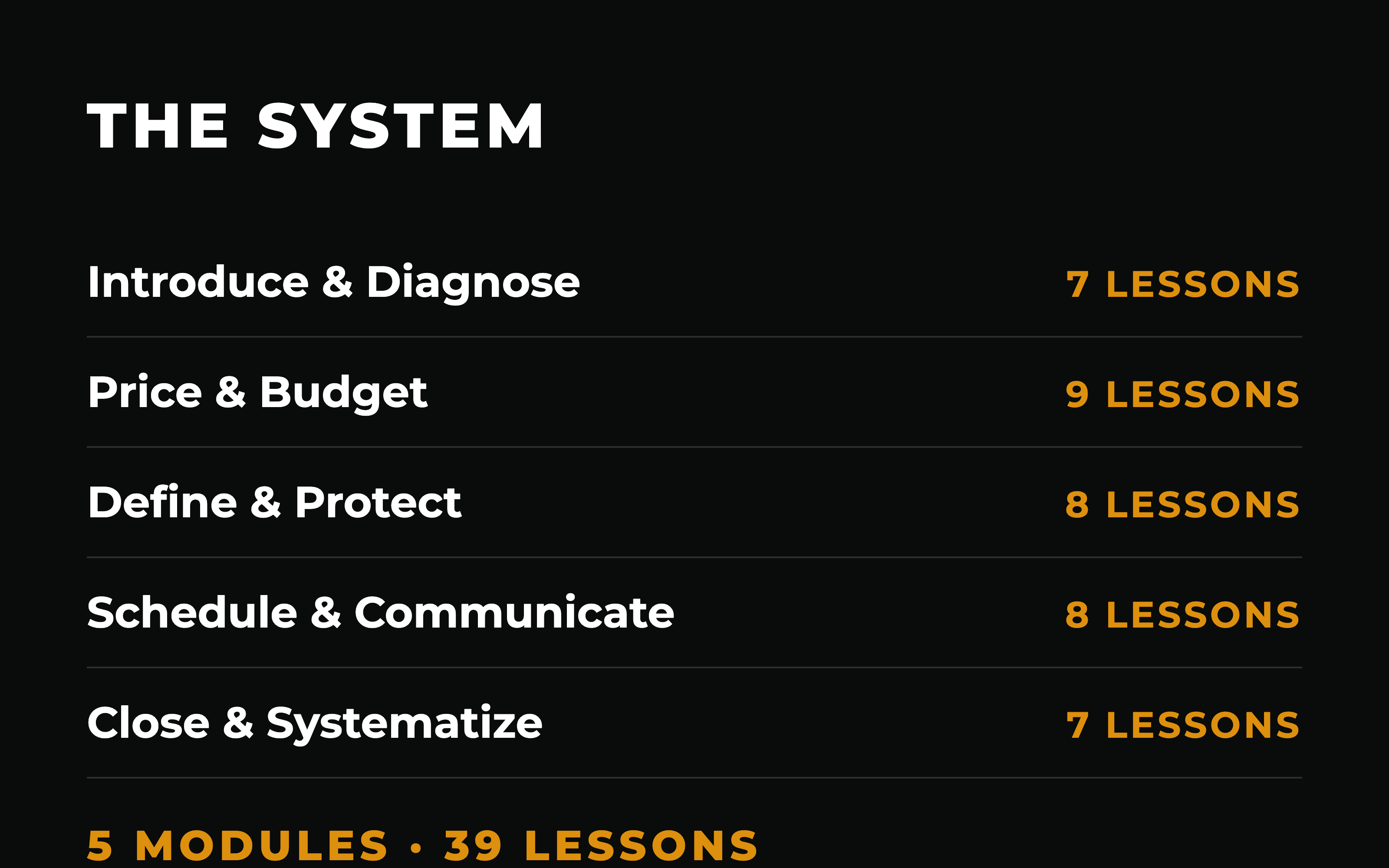

What's Inside
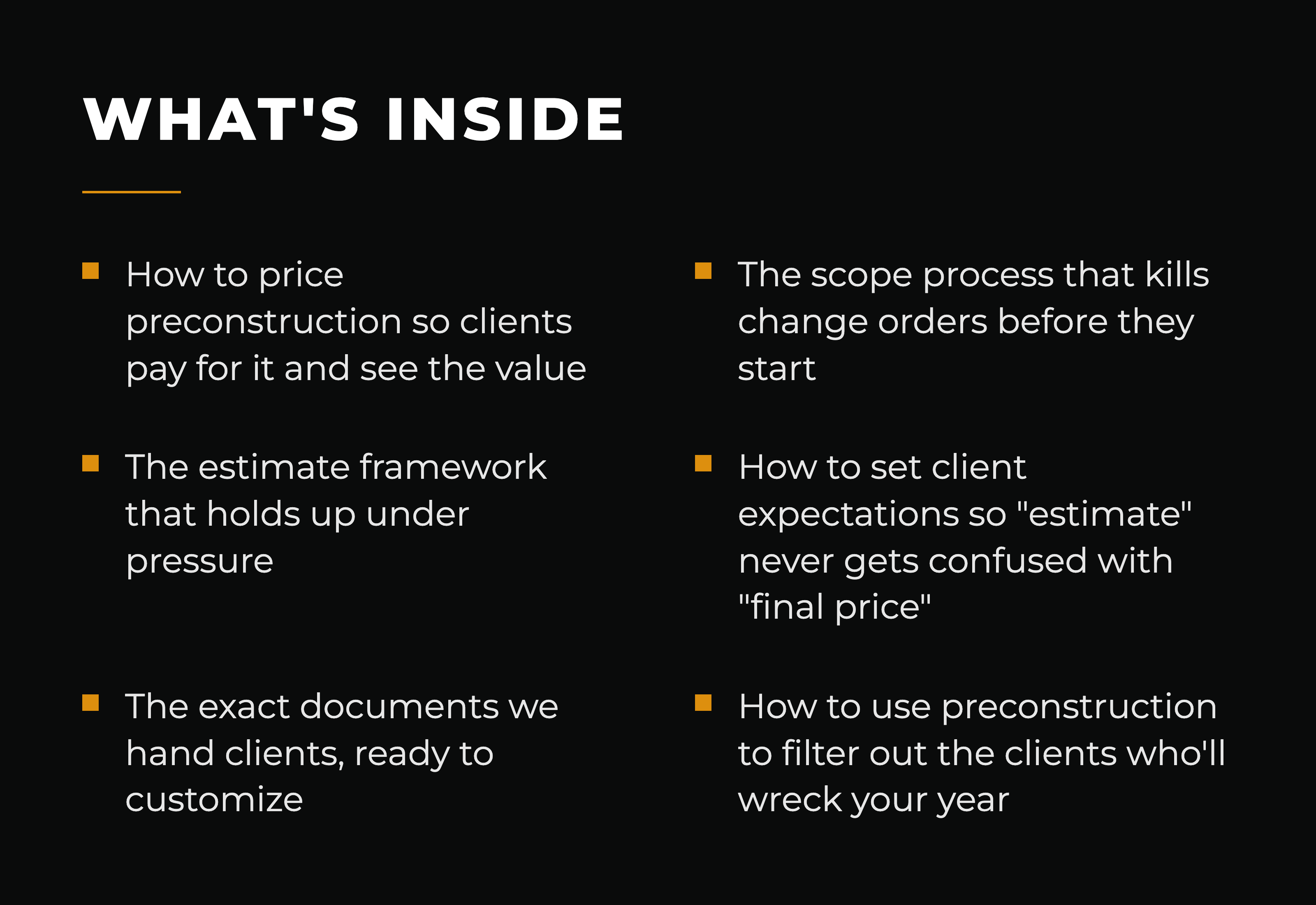
- 1.1 What preconstruction is and why clients should pay for it
- 1.2 How to frame preconstruction on the discovery call
- 1.3 The three client starting scenarios
- 1.4 Running the in-person meeting
- 1.5 Partnering vs. Bidding
- 1.6 Introducing preconstruction as a process, not a fee
- 1.7 Assessing whether the project is worth pursuing
- 2.1 The goal of pricing: reduce uncertainty quickly
- 2.2 Tier 1 pricing: historical + SF pricing (±20%)
- 2.3 Tier 2 pricing: division-based + trade input (±10–15%)
- 2.4 Tier 3 pricing: hard pricing (sub-5%)
- 2.5 Building a pricing catalog from past projects
- 2.6 The SD budget: purpose and structure
- 2.7 The DD budget: tightening without locking
- 2.8 The CD budget: hard pricing with design intent intact
- 2.9 How to manipulate data to target a budget without lying
- 3.1 Why scope is an alignment tool, not a legal document
- 3.2 Progressive scope definition: SD, DD, CD
- 3.3 Documenting assumptions so they don't blow up later
- 3.4 Value engineering as expectation alignment, not cheapening
- 3.5 High-impact VE moves and how to present them
- 3.6 What constructability really is
- 3.7 Getting trade feedback that's actually useful
- 3.8 Where ambiguity is acceptable and where it's deadly
- 4.1 Why schedule is the silent profit killer
- 4.2 Development schedule vs. construction schedule
- 4.3 Building a baseline schedule during preconstruction
- 4.4 Running trade schedule interviews
- 4.5 Communicating schedules to clients during preconstruction
- 4.6 Preventing preconstruction fatigue
- 4.7 The preconstruction communication spine
- 4.8 Leading instead of asking clients to decide
- 5.1 What "done" looks like at the end of preconstruction
- 5.2 Packaging the final deliverables: scope, budget, schedule
- 5.3 How to present the construction proposal
- 5.4 Pricing your preconstruction service
- 5.5 Internal handoff from preconstruction to construction
- 5.6 Becoming the builder architects recommend
- 5.7 Getting referrals even when projects don't build
Frequently Asked Questions
What if I don’t have time to go through everything right now?
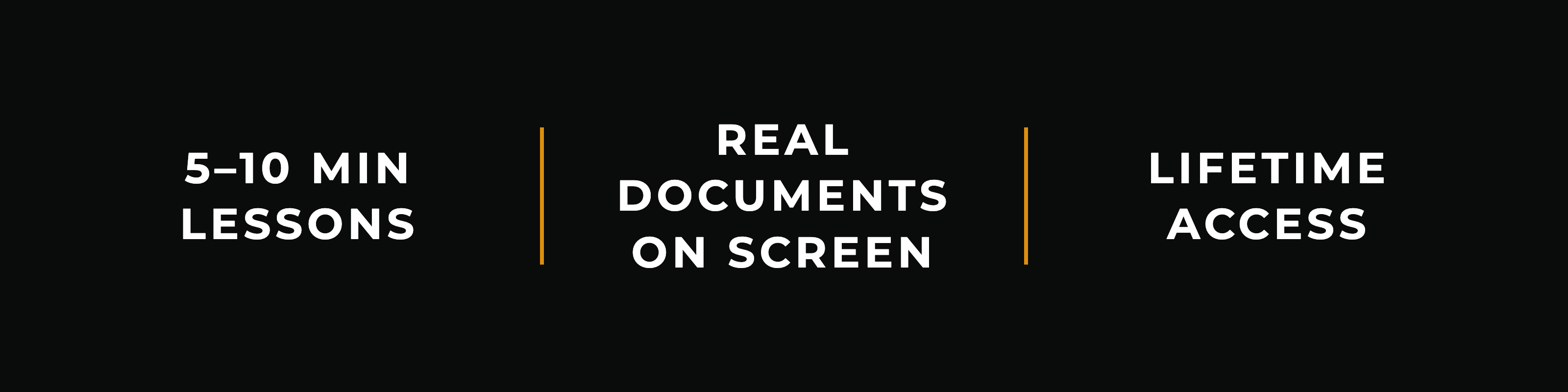
That’s why you get lifetime access. Go at your own pace. Every lesson is 5–10 minutes — designed to fit between site visits, not replace your workday.
Will this work for my market / my company size?
The principles are universal and the templates are customizable. Solo operators and $10M+ companies across the country use this. Whether you charge $5K or $50K, the framework applies.
Is there a community or support?
Yes. You get access to the Modern Craftsman builder community for Q&A, feedback, and peer conversations with builders implementing the same systems.
Is there a refund policy?
We don’t offer refunds — but we do offer results. If you go through the material and feel stuck, email us. We’ll work with you directly.
How is this different from other construction business courses?
Two ways. First, it’s built by two builders actively running construction companies — not coaches who left the field years ago. Second, every lesson comes with a real template or framework you can implement immediately. This isn’t theory. It’s infrastructure.